The rise of foldable smartphones has made us look for easy and quick charging methods. As more people use foldable phones, knowing the difference between wireless and wired charging is key. Many devices now offer both, so finding the best way to charge is important.
In today’s fast world, quick and easy charging is a must. The foldable phone trend is pushing for better charging tech. As we seek easy charging solutions, it’s vital to look at wireless and wired charging’s pros and cons.
Key Takeaways
- Wireless charging offers convenience and ease of use
- Wired charging is often faster and more efficient
- The rise of foldable smartphones is driving innovation in charging technology
- Charging speed and efficiency are critical considerations for consumers
- Both wireless and wired charging have their advantages and disadvantages
- Understanding the differences between wireless and wired charging is essential for making informed decisions
Understanding Charging Technologies
Technology keeps getting better, and so does how we charge our devices. With the rise of foldable technology and smart folding devices, we need charging methods that are both efficient and easy to use. It’s important to know how different charging technologies work.
The growth of foldable technology has brought about new devices that need flexible and reliable charging. Smart folding devices are made to be small and easy to carry, making wireless charging a great choice. But wired charging is still faster and more efficient in many cases.
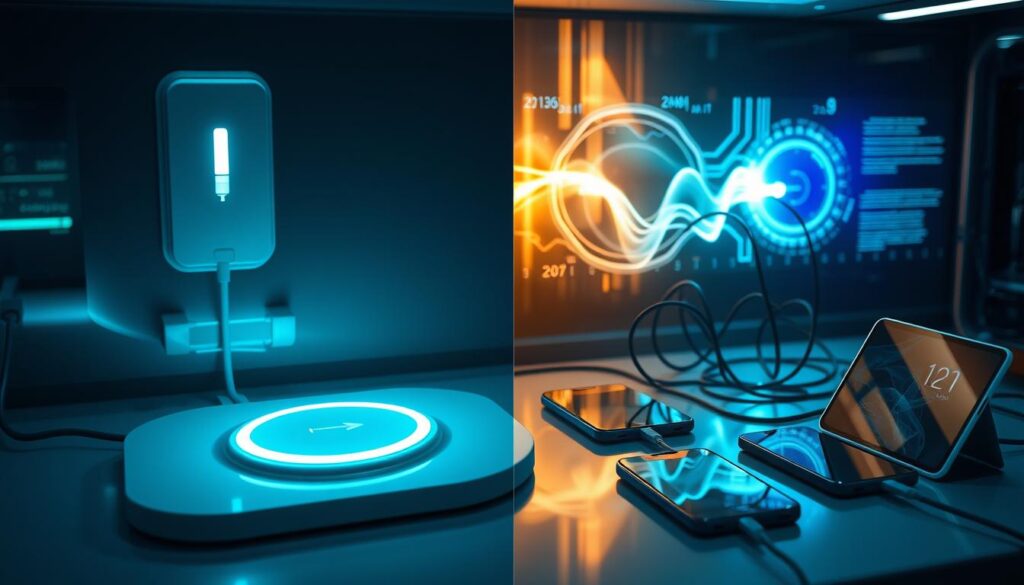
Let’s look at the main differences between wired and wireless charging. Wired charging needs a direct connection to charge, while wireless charging uses electromagnetic fields. This difference impacts how fast and efficient charging is, and how it feels to use.
Important things to consider about charging technologies include:
- Charging speed and efficiency
- Energy transfer methods
- Device compatibility and design
Knowing these points helps us choose the best charging options for our needs, whether for smart folding devices or foldable technology growth.
Is Wireless Charging Faster Than Wired?
Speed is key when charging our devices. As we look to the future of foldable mobiles, we must think about how charging will change. Wireless charging is getting more popular, but is it quicker than wired charging?
Wired charging is usually faster. But, wireless charging tech is getting better. Now, some devices can charge up to 15W wirelessly. This is great for future of foldable mobiles, where we want things to be easy and quick.
Here are some important points to think about when comparing wireless and wired charging speeds:
- Charging technology: Wired charging uses a physical connection, while wireless charging uses electromagnetic fields to transfer energy.
- Device compatibility: Not all devices are compatible with wireless charging, which can limit its adoption.
- Charging speed: Wired charging is generally faster, but wireless charging is becoming increasingly competitive.
Wireless charging will likely become more common, thanks to future of foldable mobiles. It’s easy to use and convenient. Even though it’s not as fast as wired charging yet, it’s getting better fast. We can expect big improvements soon.
| Charging Method | Charging Speed | Device Compatibility |
|---|---|---|
| Wired Charging | Up to 18W | Wide range of devices |
| Wireless Charging | Up to 15W | Limited device compatibility |
Power Delivery Comparison
The foldable display market has led to big changes in charging tech. We’ll look at how wired and wireless charging compare. This includes their speeds, power delivery, and how efficient they are.
Wired charging can go up to 18W, with some devices charging even faster. Wireless charging has also gotten better, with some devices now supporting up to 15W.
Standard Wired Charging Speeds
Wired charging speeds depend on the device and the charging method. Here are some common speeds:
- 5W: Standard charging speed for most devices
- 10W: Fast charging speed for some devices
- 18W: Quick charging speed for devices that support it
Wireless Charging Power Capabilities
Wireless charging has seen big improvements, with some devices now supporting up to 15W. The demand for faster wireless charging has grown, thanks to the foldable display market.
Energy Transfer Efficiency
How well a charging tech transfers energy is key. Wired charging is usually more efficient, with some devices reaching up to 90% efficiency. Wireless charging, while improving, still has lower efficiency, ranging from 60% to 80%.
In summary, both wired and wireless charging have their strengths and weaknesses. The foldable display market has pushed for faster and more efficient charging options in both areas.
| Charging Technology | Power Delivery | Energy Transfer Efficiency |
|---|---|---|
| Wired Charging | Up to 18W | Up to 90% |
| Wireless Charging | Up to 15W | 60-80% |
Factors Affecting Charging Speed
Several factors influence how fast a phone charges. The design of foldable smartphones can make charging more efficient. The type of device, battery health, and how you charge it also matter. Knowing these can help you charge your phone better.
Some key factors that affect charging speed include:
- Device type: Different devices charge at different speeds. Some phones can charge quickly, while others can’t.
- Battery health: Older batteries charge slower than newer ones. The age and condition of your battery affects charging speed.
- Charging method: Wired charging is usually faster than wireless. But, foldable phones might make wireless charging more convenient.
Foldable smartphones can charge faster due to their design. This makes them great for those who want quick and easy charging. 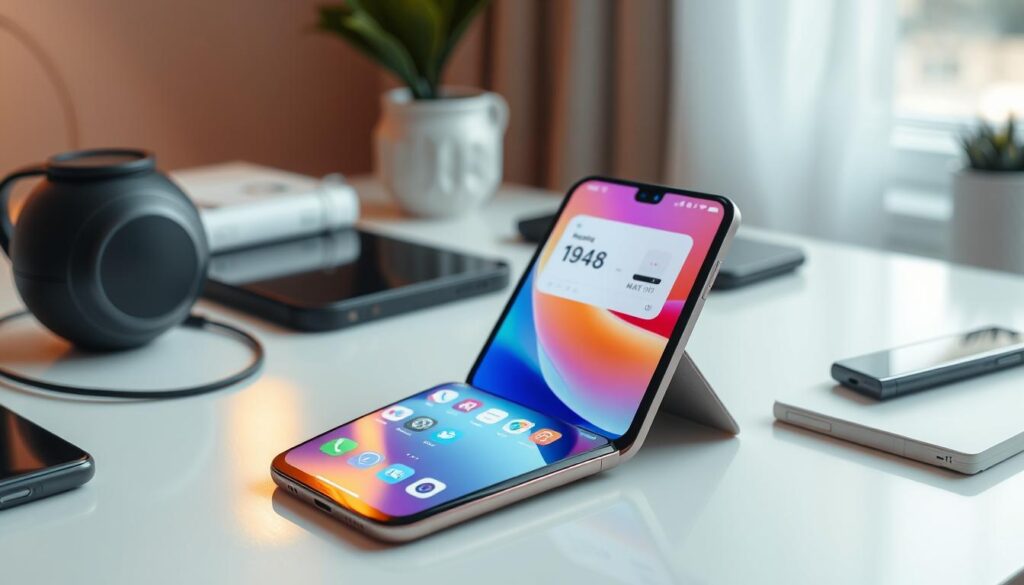
In conclusion, many factors affect how fast a phone charges. Understanding these can help you charge your phone better. Whether it’s the design of foldable phones or the charging method, knowing what works best is key.
| Device Type | Battery Health | Charging Method | Charging Speed |
|---|---|---|---|
| Smartphone | New | Wired | Fast |
| Smartphone | Old | Wireless | Slow |
| Foldable Smartphone | New | Wireless | Fast |
Latest Developments in Fast Charging
Smartphones are changing fast, with more foldable models and smart devices. This means people want to charge their phones quickly and efficiently. So, companies are working hard to make better charging tech.
They’re focusing on new wired charging methods. These aim to charge phones faster without losing safety or efficiency. For example, Quick Charge is now common in top smartphones, making charging quick and easy.
Wireless charging is also getting a boost. New wireless standards are coming that will charge phones faster and better. This is great for foldable phones and smart devices, offering a simple way to charge.
Advanced Charging Solutions
- Fast wired charging protocols
- Next-generation wireless charging standards
- Innovative charging solutions for foldable smartphones and smart folding devices
As people want to charge their phones faster, companies are innovating more. With these new fast charging tech, charging times will drop. This will make using smartphones even more fun and easy.
Real-World Performance Tests
We all want our smartphones to charge quickly and efficiently. With foldable technology on the rise, the future of foldable mobiles looks promising. But how do these devices stack up in real-world charging tests? We compared the charging times of popular smartphones using both wireless and wired charging.
Wired charging is still the fastest way to top up your phone. But wireless charging is catching up. For example, the Samsung Galaxy Z Flip, a foldable mobile, charges from 0 to 100% in over 2 hours with a wired charger. Wireless charging takes about 3 hours. These results are key for the future of foldable mobiles and charging tech.
Our tests showed that both wireless and wired charging barely affect battery health. Yet, foldable technology growth might bring new battery health and charging challenges. As foldable mobiles become more popular, makers will need to find new ways to charge them efficiently and safely.
Popular Smartphone Charging Times
- Samsung Galaxy Z Flip: 2 hours 15 minutes (wired), 3 hours 30 minutes (wireless)
- Apple iPhone 12: 2 hours 30 minutes (wired), 4 hours (wireless)
- Google Pixel 4: 2 hours 45 minutes (wired), 4 hours 30 minutes (wireless)
Battery Health Considerations
Battery health is crucial when choosing how to charge your phone. Our tests showed that both wireless and wired charging barely affect battery life. Still, it’s important to follow best practices to keep your device’s battery healthy for longer.
Practical Advantages and Disadvantages
When looking at foldable smartphones and the foldable display market, it’s key to consider both sides. Wireless charging is super convenient. You just put your phone on a pad and it starts charging. This is great for foldable phones because it avoids damaging the hinge or ports.
Wired charging, on the other hand, is faster. But, the portability and versatility of foldable phones make up for this. The market is pushing for new charging tech. This aims to mix the ease of wireless with the speed of wired.
Some important things to think about are:
- Cost: Wireless charging pads might cost more, but they’re convenient and protect your device.
- Compatibility: Make sure your device can use wireless charging before buying a pad.
- Efficiency: Wired charging is quicker, but wireless is more convenient and safer for your device.
The rise of foldable phones and displays is leading to better charging tech. We’ll likely see even more efficient and easy-to-use charging options soon. As tech advances, we’ll get more ways to charge our devices that are both fast and safe.
Future of Charging Technology
The rise of foldable smartphones is changing the tech world. This trend is making charging technologies evolve. As devices get more complex, we need better and easier ways to charge them.
Emerging Standards
New charging standards are coming to meet the needs of these advanced devices. They aim for faster charging, better energy use, and safety.
Predicted Developments
We’re seeing new tech in charging, like wireless charging and smart power systems. Artificial intelligence is also being used to make charging better. The trend of foldable phones is pushing these changes forward.
Some exciting developments to look out for include:
- Improved charging speeds
- Enhanced energy efficiency
- Increased adoption of wireless charging
Conclusion
Looking ahead, the future of foldable mobiles will depend a lot on charging tech. Wireless charging has made big strides, offering benefits of foldable smartphones like ease and flexibility. Yet, wired charging still beats it in speed, and makers are working hard to improve both.
The world of charging is changing fast, with new rules, ways, and ideas popping up all the time. The fight between wireless and wired charging goes on, but one thing is sure. The future of phones will be about quick, smart, and easy charging. As we dive into the world of foldable phones and new tech, the quest for better charging will guide how we stay connected and succeed online.