Choosing the right camera lens is key to taking amazing photos. With so many options, knowing your style and what shots you want is crucial. The right lens can greatly improve your photo quality, making it a big part of your photography journey.
Photography needs the right tools, and the lens is a top priority. By picking the right lens for your needs, you can elevate your photography and get the results you want.
Key Takeaways
- Camera lens selection is critical in meeting your photography needs
- Understanding your photography style is essential in choosing the ideal camera equipment
- The right lens can make a significant difference in the quality of your photos
- Camera lens selection is a vital part of your photography journey
- Choosing the ideal camera equipment can help you achieve the desired results
- Considering your photography needs is crucial in selecting the right camera lens
Understanding Camera Lens Basics
Getting great photos starts with knowing your camera lens basics. You need to understand focal length, aperture, and the difference between prime and zoom lenses. Knowing these will help you pick the best lens for your photos.
Focal length is the distance from the camera’s sensor to the lens. It decides the angle of view. Shorter lengths give a wider view, while longer ones narrow it down. Aperture, or f-stop, controls light. Smaller f-stops let in more light, and larger ones let in less.
What is Focal Length?
Focal length is key in camera lens basics. It changes the perspective and depth of your photos. For landscapes, use a short focal length like 24mm. For wildlife or sports, go for a longer one, like 200mm.
Aperture and F-stops Explained
Aperture is another basic concept. It’s the lens opening that lets light in. A small f-stop, like f/2.8, means a big opening. A big f-stop, like f/16, means a small opening.
Prime vs Zoom Lenses
Prime lenses have a fixed length and are sharp with wide apertures. They’re great for portraits because they create a shallow depth of field. Zoom lenses are versatile with changing lengths. They’re good for many types of photography, from landscapes to street shots.
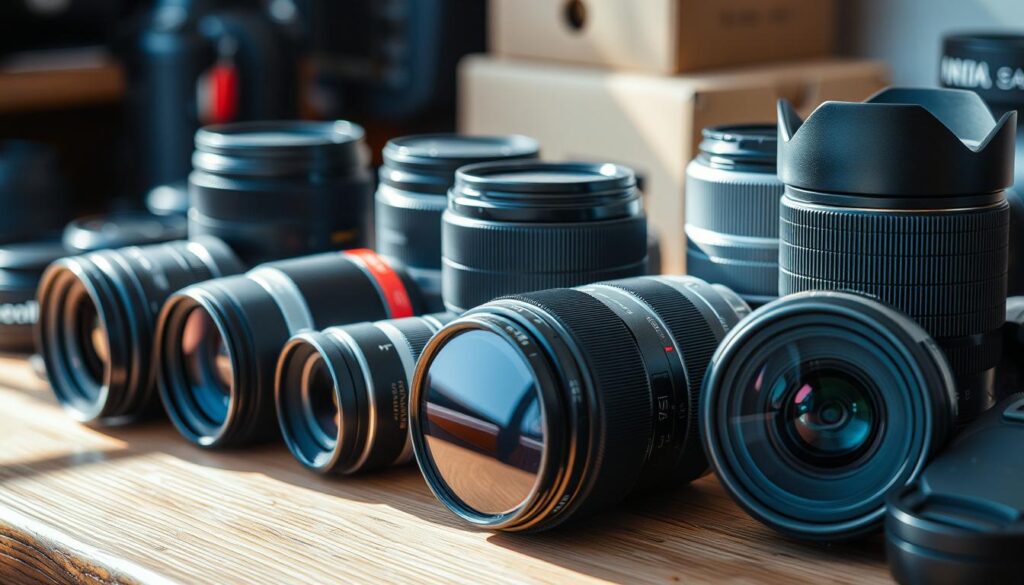
Understanding focal length, aperture, and the prime vs zoom lens difference will help you choose the right lens. This way, you can take amazing photos.
Different Types of Camera Lenses and Their Uses
Photography greatly depends on the camera lens used. There are many types of lenses, each with its own features and uses. Knowing about these lenses helps in taking the perfect photo. Types of camera lenses include wide-angle, telephoto, macro, and fisheye lenses, among others.
Each lens is best for certain photography styles. For example, wide-angle lenses are great for landscapes. Telephoto lenses are better for distant subjects. Lens uses depend on the photography type, and knowing this is key for the desired look.
Some common types of camera lenses and their uses include:
- Wide-angle lenses: ideal for landscape, architecture, and interior photography
- Telephoto lenses: suitable for wildlife, sports, and portrait photography
- Macro lenses: used for extreme close-up photography, such as capturing small objects or details
- Fisheye lenses: often used for creative, distorted effects in photography
By knowing the different types of camera lenses and their uses, photographers can pick the right lens. This helps in capturing high-quality images that show their unique photography styles.
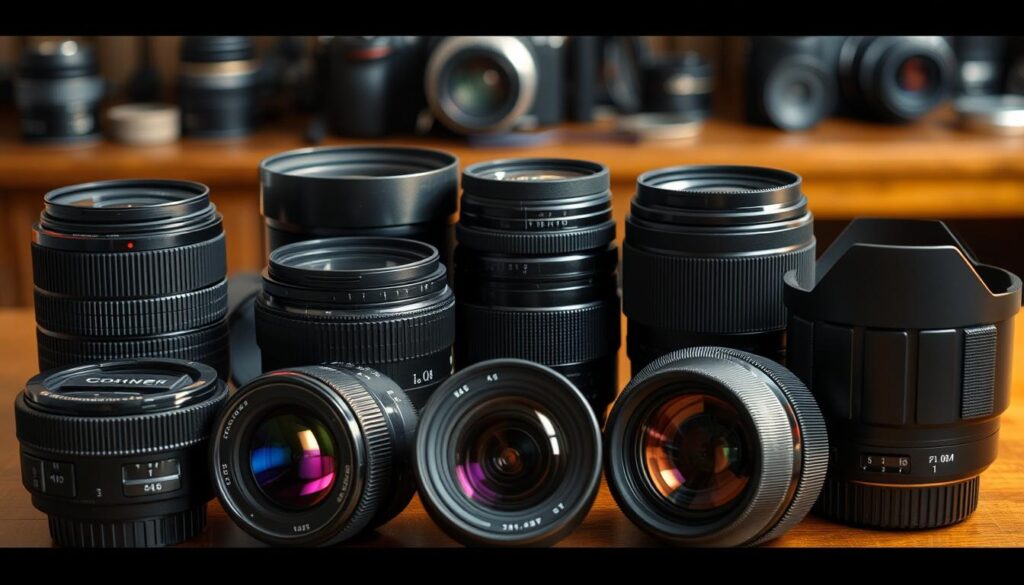
The key to great photos is understanding the different types of camera lenses and their uses. Choosing the right lens for the job unlocks a photographer’s full creative potential. This takes their photography to the next level.
| Type of Lens | Use | Example |
|---|---|---|
| Wide-angle lens | Landscape photography | Capturing a broad landscape |
| Telephoto lens | Wildlife photography | Capturing a distant animal |
| Macro lens | Extreme close-up photography | Capturing the details of a small object |
How to Choose the Right Camera Lens
Choosing a camera lens can be tough, even for beginners. With so many options, it’s key to think about a few things. Your photography style is a big deal. Different styles, like portrait or landscape, need specific lenses.
Also, think about your budget. Lenses can cost a lot, so set a budget and stick to it. Make sure the lens fits your camera. This saves time and money later.
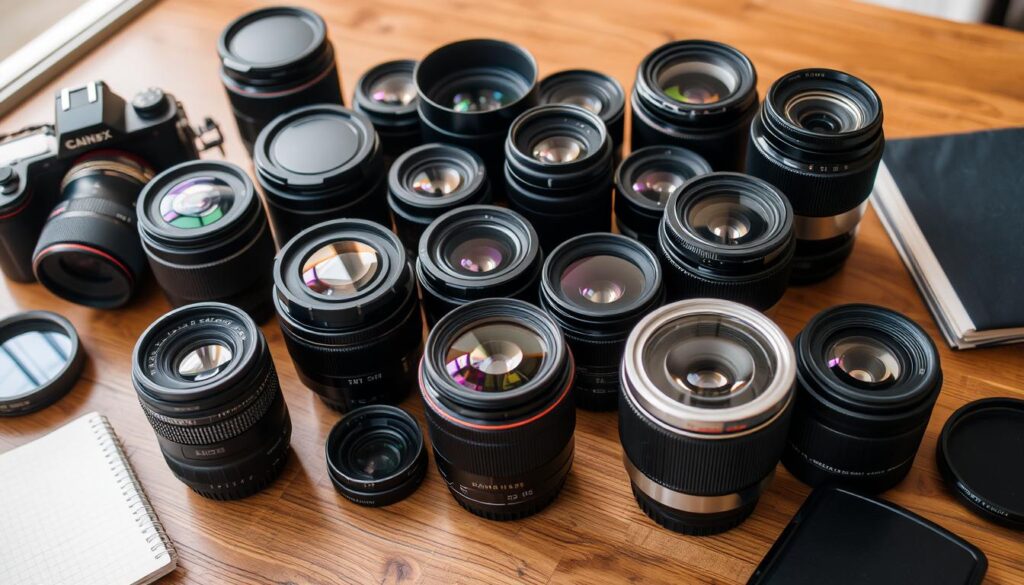
Determining Your Photography Style
First, think about what kind of photos you like taking. For portraits, a prime lens with a wide aperture is great. Landscape photos need a wide-angle lens with a small aperture.
Budget Considerations
When budgeting, remember the lens cost and any extra accessories. Look around to find the best deal for your money.
Compatibility with Your Camera Body
Lastly, check if the lens works with your camera. Look on the manufacturer’s site or ask a photography expert. By thinking about these things, you’ll find a lens that suits you and helps you take amazing photos.
Understanding Lens Specifications
Choosing a camera lens requires knowing about lens specs. Terms like focal length, aperture, and image stabilization might seem confusing. But, understanding these specs is key to picking the right lens. Camera lens technology has grown a lot, offering many choices for different photography needs.
Let’s look at the main parts of lens specs. These include:
- Focal length: The distance between the camera’s sensor and the lens, measured in millimeters.
- Aperture: The lens opening that controls the amount of light entering the camera, measured in f-stops.
- Image stabilization: A feature that reduces camera shake and blur, mostly in low-light conditions.
Knowing these lens specifications helps photographers pick the right lens. The right lens can greatly improve your photos, whether for portraits, landscapes, or sports. 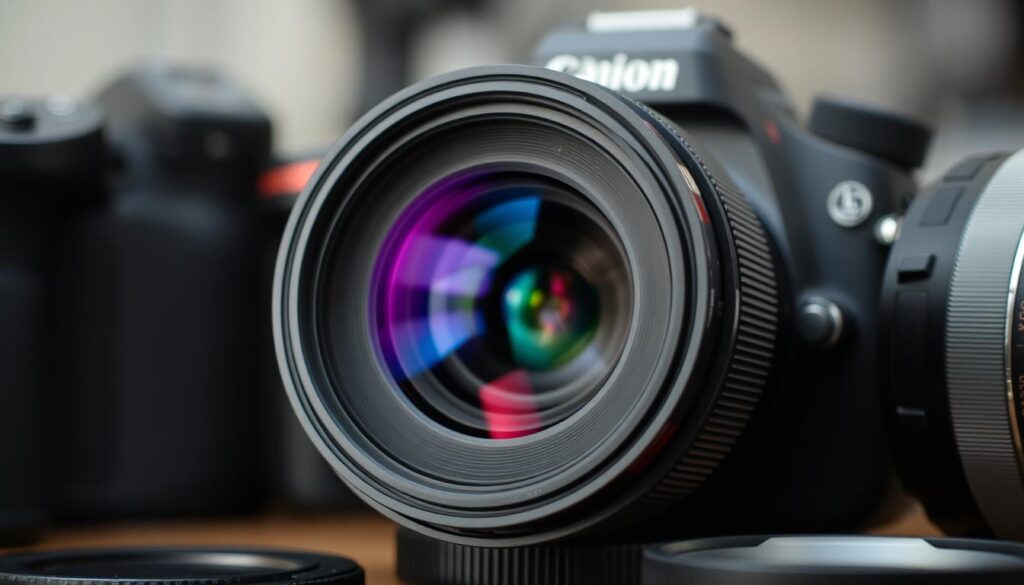
Thanks to camera lens technology, there are many lens types to choose from. From prime lenses to zoom lenses, each has its own benefits. By looking at lens specs, photographers can find the perfect lens for their needs and take amazing photos.
Popular Lens Categories for Different Photography Styles
The right lens can change everything in photography. Different styles need specific lenses to get the look you want. For example, portrait lenses with a wide aperture create a shallow depth of field. Landscape lenses, on the other hand, use wide-angle lenses to capture big scenes.
There are many lens categories for various photography styles. These include portrait lenses, landscape lenses, sports lenses, and street photography lenses. Each type has its own special features, making them perfect for certain types of photos.
Portrait Photography Lenses
Portrait lenses are made for taking great photos of people. They have a wide aperture. This creates a shallow depth of field and a beautiful bokeh effect.
Landscape Photography Lenses
Landscape lenses are for wide shots of nature. They have a narrower aperture. This gives a deeper depth of field and sharper images.
Sports and Wildlife Photography Lenses
Sports and wildlife lenses are for fast-moving subjects. They have a long focal length and wide aperture. This helps capture fast subjects with a shallow depth of field and fast shutter speed.
Street Photography Lenses
Street photography lenses are small and versatile. They have a wide-angle lens and wide aperture. This creates a shallow depth of field and beautiful bokeh effect.
Knowing about different lens categories helps you pick the right one for your style. Whether you love portrait, landscape, sports, or street photography, there’s a lens for you.
| Lens Category | Characteristics | Photography Style |
|---|---|---|
| Portrait Lenses | Wide aperture, shallow depth of field | Portrait photography |
| Landscape Lenses | Wide-angle, narrow aperture | Landscape photography |
| Sports Lenses | Long focal length, wide aperture | Sports and wildlife photography |
| Street Photography Lenses | Compact, wide-angle, wide aperture | Street photography |
Important Factors in Lens Quality
When looking at a camera lens, several key factors are important. These factors go beyond just the images it takes. A lens’s build and features also matter a lot. A well-made lens with weather sealing is great for outdoor photography.
The lens’s build quality is very important. It affects how long the lens lasts and how well it works. A good lens has a solid feel, smooth focus, and a strong mount. Weather sealing keeps the lens safe from dust, water, and more. Image stabilization is also key, as it helps prevent blurry photos in low light.
Here are some important features to look for in a top-notch lens:
- Autofocus performance: Fast and accurate autofocus is essential for capturing sharp images of moving subjects.
- Image stabilization: This feature helps reduce camera shake and blur, even in low-light conditions.
- Build quality: A well-built lens with weather sealing can withstand harsh conditions and provide years of reliable service.
By thinking about these factors, photographers can pick the right lens for their needs and budget. Whether you’re a pro or just starting out, a good lens can make a big difference in your photos.
It’s also important to look at the lens’s optical quality, distortion, and chromatic aberration. By carefully checking these, photographers can find a lens that offers top-notch image quality and meets their specific needs.
| Factor | Importance | Description |
|---|---|---|
| Build Quality | High | Affects durability and performance |
| Weather Sealing | High | Protects lens from environmental elements |
| Image Stabilization | Medium | Reduces camera shake and blur |
| Autofocus Performance | High | Essential for capturing sharp images of moving subjects |
Common Mistakes to Avoid When Buying Camera Lenses
When buying camera lenses, it’s key to steer clear of common mistakes. One big error is not checking if the lens fits your camera. This can cause problems and waste your money.
Another mistake is not looking at lens purchasing tips. This includes reading what others say and checking the lens’s features. It helps you choose wisely and avoid buying the wrong lens.
Some common mistakes to avoid when buying camera lenses include:
- Not researching the lens’s compatibility with your camera body
- Overlooking the importance of image stabilization
- Not reading reviews from other users
- Not considering the lens’s build quality and weather sealing
By avoiding these common mistakes and following lens purchasing tips, you can make a smart choice. This ensures you get the right lens for your photography needs.
Remember, buying a camera lens is a big deal. It’s important to get it right. By doing your homework and avoiding common mistakes, you can find the perfect lens. This will help you take amazing photos.
| Lens Type | Compatibility | Image Stabilization |
|---|---|---|
| Prime Lens | Check camera body compatibility | Yes/No |
| Zoom Lens | Check camera body compatibility | Yes/No |
Maintaining and Caring for Your Camera Lenses
Keeping your camera lenses in good shape is key to their longevity. Regular cleaning, proper storage, and using protection accessories are essential. They help prevent damage and keep your images sharp.
For lens cleaning, the right tools and methods are crucial. Microfiber cloths and soft brushes are great for dust and dirt. For tough stains, a lens cleaning solution can work, but always check the instructions.
Cleaning Best Practices
- Use a microfiber cloth to gently wipe away dust and debris
- Avoid using paper products, such as tissue or paper towels, which can scratch the lens
- Use a soft brush to remove dust and debris from the lens crevices
Storage Tips
Storing your lenses right is also important. Keep them in a cool, dry place, away from sunlight and moisture. Use a lens case or pouch to shield them from scratches.
Protection Accessories
Accessories like lens caps and hoods are great for protecting your lenses. Caps keep dust out, and hoods stop flare and ghosting. By following these tips, your lenses will stay in top shape and capture stunning images.
| Accessories | Purpose |
|---|---|
| Lens caps | Protect the lens from dust and debris |
| Lens hoods | Prevent flare and ghosting |
| Microfiber cloths | Gently clean the lens surface |
Conclusion: Making Your Final Lens Selection
In photography, the right lens is crucial. It unlocks your creative potential. Knowing about focal length, aperture, and lens types helps you choose wisely. This choice greatly affects your photos, whether it’s portraits, landscapes, or action shots.
When picking a lens, think about your budget, camera body, and photography style. Making an informed choice leads to photos that show your unique vision. This is key to capturing your best shots.
Explore the world of photography equipment and let your lens enhance your work. With the right lens, you can capture endless moments. Enjoy the thrill of taking amazing photos.