Welcome to our ultimate guide on choosing between a MacBook and a Windows laptop. This is your top resource for laptop comparison. With so many options out there, picking the right laptop can feel overwhelming. This guide will help you understand the main differences to make a smart choice.
When comparing laptops, think about what you need and want. Are you a student, a professional, or just looking for a laptop for fun? This guide aims to give you the info you need to find the perfect laptop for you. It will make your laptop buying guide experience easier.
Key Takeaways
- Research your options thoroughly in the laptop comparison market
- Consider your budget and needs when looking at MacBook vs Windows laptops
- Read reviews and compare features in a laptop buying guide
- Think about your lifestyle and how you plan to use your laptop
- Don’t be afraid to ask for advice or guidance in your laptop comparison journey
- Take your time and weigh your options carefully in the MacBook vs Windows debate
Understanding the Fundamental Differences Between MacBook and Windows
Choosing a laptop means picking an operating system. MacBooks use macOS, while Windows laptops use Windows. Knowing how each works is key to making a good choice.
MacOS and Windows have different looks and feels. MacOS is sleek and easy to use. Windows lets you change things more. Think about what you need in a laptop and its software.
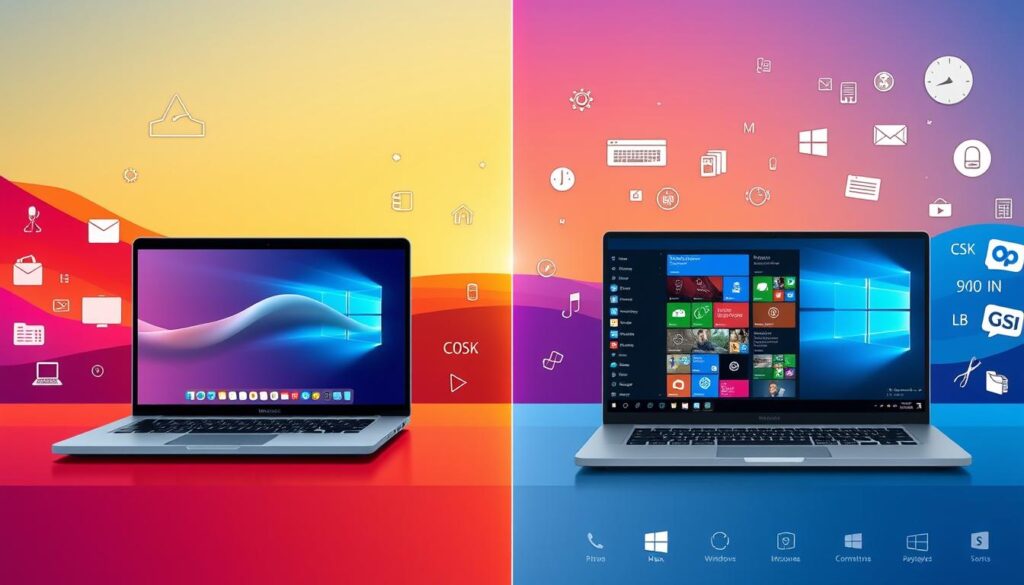
Folding smartphones are new, but laptops stick to old designs. Here’s what sets MacBooks and Windows laptops apart:
- Operating System: macOS vs Windows
- User Interface: Sleek and intuitive vs Customizable
- Software Ecosystem: Exclusive to Apple vs Wide range of options
Operating System Architecture
MacOS and Windows are built differently. MacOS is based on Unix, while Windows is based on NT.
User Interface Design
Both macOS and Windows aim to be easy to use. But, macOS is simpler, and Windows lets you change things more.
Software Ecosystem
MacOS and Windows offer different software choices. MacOS has fewer options, but Windows has many.
In short, knowing the differences between MacBooks and Windows laptops is important. Think about the operating system, user interface, and software ecosystem. This will help you pick the right laptop for you.
Price Points and Value Proposition Comparison
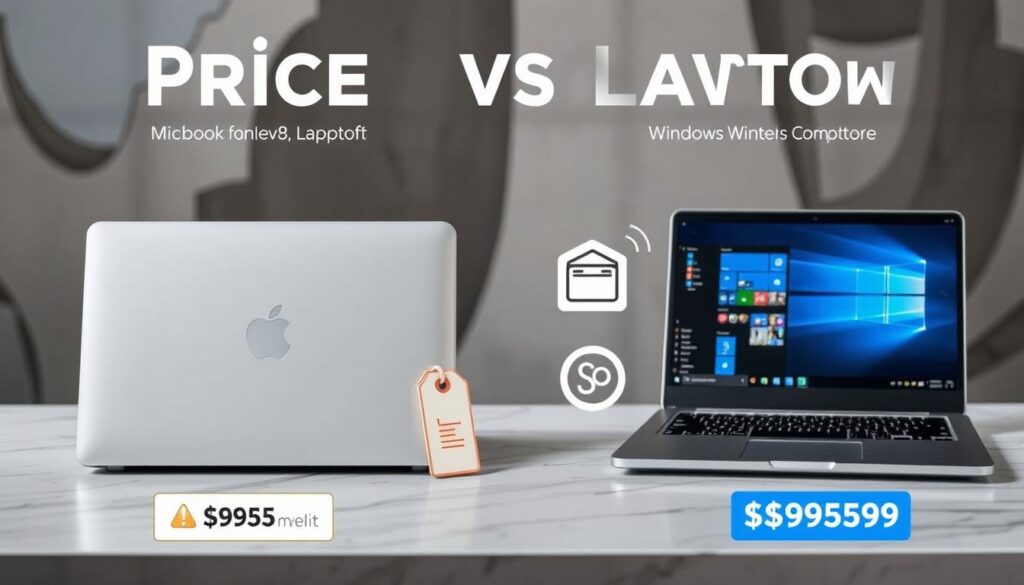
Choosing between a MacBook and a Windows laptop often comes down to price. MacBooks start at around $1,000, while Windows laptops can be much cheaper. It’s important to look at the laptop price comparison and what each offers in terms of value proposition.
The foldable phone trend shows that new tech can be worth it in the long run. When picking a laptop, think about durability, performance, and extra costs. Here are some important points to remember:
- Entry-level MacBooks start at around $1,000
- Windows laptops can start at a few hundred dollars
- Durability and performance are key factors in the value proposition
- The cost of additional software or hardware should be considered
By looking at these factors and comparing prices, you can choose wisely. Don’t just focus on the initial cost. Think about the value proposition of your laptop over time.
Performance Metrics: How to Choose Between a MacBook and Windows Laptop
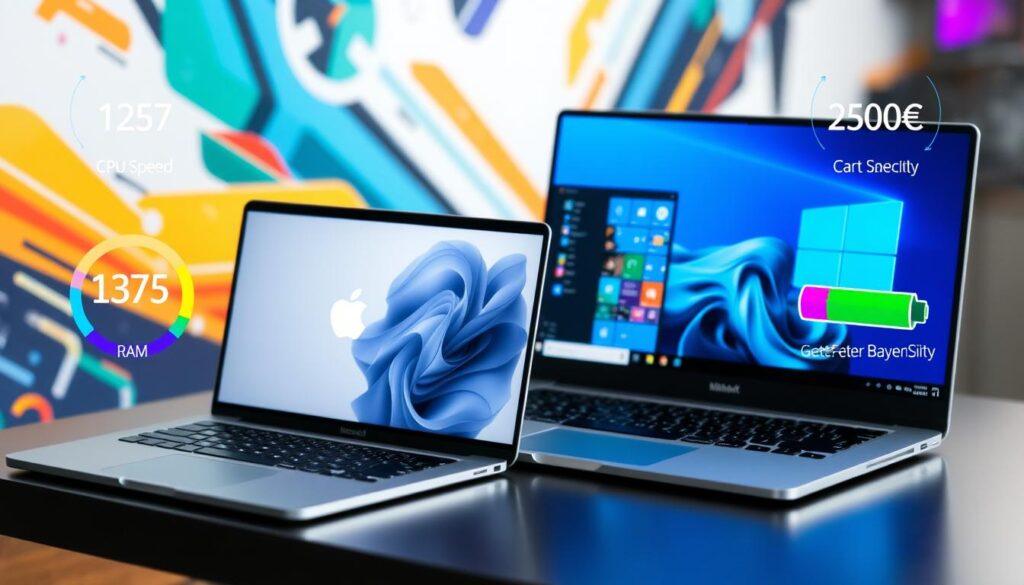
When comparing laptops, we look at processing power, graphics, and memory. MacBooks are known for their efficient operating system, leading to better battery life. Windows laptops, on the other hand, offer more variety in hardware, which can be better for specific tasks.
MacBooks often work better with other Apple devices. But, Windows laptops are more customizable and easier to upgrade. Gamers and video editors might prefer laptops with strong graphics and processing power. The idea of smart folding devices shows the future of portable, high-performance tech.
Key performance metrics to consider include:
- Processing power: Measured in GHz, this determines how quickly your laptop can execute tasks.
- Graphics capabilities: Essential for gaming, video editing, and other graphics-intensive activities.
- Memory management: Ample RAM ensures smooth multitasking and performance.
In conclusion, comparing laptops is key when choosing between a MacBook and a Windows laptop. Look at processing power, graphics, and memory to make a choice that fits your needs.
| Laptop Model | Processing Power | Graphics Capabilities | Memory Management |
|---|---|---|---|
| MacBook Air | 1.1 GHz | Intel Iris Plus | 8 GB RAM |
| Windows Laptop | 2.5 GHz | NVIDIA GeForce | 16 GB RAM |
Software Compatibility and Available Applications
Choosing between a MacBook and a Windows laptop means looking at software compatibility. MacBooks only run macOS, limiting their software options. Windows laptops, on the other hand, can use a wide range of software, including some macOS apps through emulation.
The variety of available applications is key. MacBooks have fewer software choices, while Windows laptops offer more. This is crucial for those needing specific software for work or hobbies. The rise of foldable technology in phones could also shape future software and app development, leading to more flexible devices.
Important factors to consider include:
- Operating system architecture
- Software ecosystem
- Emulation and virtualization options
- Compatibility with specific software requirements
As technology advances, think about how software compatibility and available applications affect your choice. Weighing these factors helps you make a decision that fits your needs and supports your success.
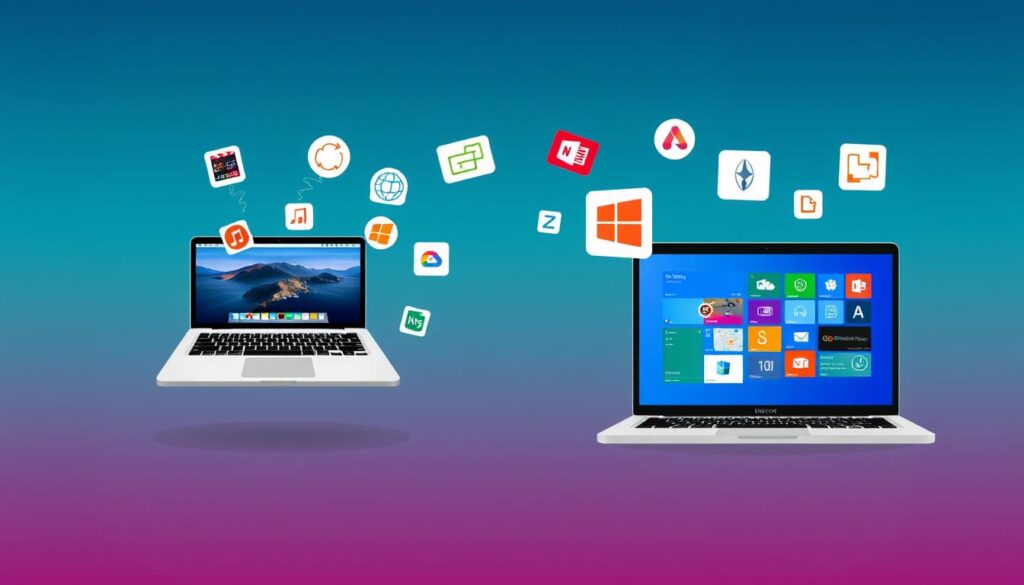
The growth of foldable technology might change how we use software and apps. Consider how these advancements could enhance your experience and meet your goals.
| Device Type | Operating System | Software Compatibility |
|---|---|---|
| MacBook | macOS | macOS-compatible software |
| Windows Laptop | Windows | Windows-compatible software, including some macOS applications through emulation or virtualization |
Design Philosophy and Build Quality
MacBooks and Windows laptops have different design philosophies. MacBooks are sleek and minimalist, often made of aluminum. Windows laptops vary, from budget-friendly plastic to premium metal.
MacBooks are seen as more durable and long-lasting. They use high-quality materials for daily use. Windows laptops can vary, with some being flimsy and others feeling premium.
Material Construction
The materials used in laptops affect their build quality. MacBooks have aluminum bodies that are durable and light. Windows laptops use various materials, like plastic, metal, and carbon fiber.
Durability Factors
Durability depends on materials, design, and build quality. MacBooks are often more durable than Windows laptops. But, some Windows models focus on durability too.
The future of laptops is exciting, with foldable mobiles leading the way. We might see foldable screens and flexible keyboards. The focus will be on combining function and beauty, with a strong emphasis on design and build quality.
User Experience and Learning Curve
Choosing between a MacBook and a Windows laptop depends a lot on user experience. Intuitive interface and ease of use are key. MacBooks are known for being easy to use, with a simple interface for beginners.
Windows laptops, on the other hand, offer more customization but have a steeper learning curve. This is true for those moving from macOS. Yet, it’s great for users who want more control over their device.
The foldable display market is expanding, bringing new user interfaces and experiences. We’ll see new designs that improve how we use devices.
When picking between a MacBook and a Windows laptop, think about what you need. If you want something straightforward, a MacBook might be best. But if you prefer customization and are okay with learning, a Windows laptop could be right for you.
Important factors to consider include:
- Ease of navigation
- Customization options
- Intuitive interface
- Availability of support and resources
Security Features and Privacy Considerations
MacBooks and Windows laptops have different strengths when it comes to security. MacBooks have Gatekeeper and XProtect to block malware. Windows laptops have Windows Defender for protection.
Privacy is a big concern for users. They want to keep their personal data safe. MacBooks are known for their strong security, thanks to macOS’s low malware risk. But, Windows laptops have also stepped up their privacy game with Windows Hello and Windows Information Protection.
Foldable smartphones have shown us that security is always getting better. As laptops evolve, we’ll see new security features. Important security and privacy features include:
- Built-in antivirus software
- Firewall protection
- Regular software updates
- Strong password management
By looking at these points, users can choose the best laptop for their security and privacy needs.
Professional vs Personal Use Cases
Choosing between a MacBook and a Windows laptop depends on your use. MacBooks are great for professional use because they work well with other Apple devices and software. Windows laptops, on the other hand, are better for business applications because they support many software and hardware options.
As we move towards the future of foldable mobiles, picking a laptop that meets your changing needs is key. Think about what you’ll use your laptop for most.
Here are some things to consider for work and play:
- Content creation: MacBooks are perfect for creative jobs like graphic design, video editing, and photography.
- Business applications: Windows laptops are great for work because they work well with Microsoft Office and other software.
- Entertainment value: Both MacBooks and Windows laptops are good for watching movies and playing games.
So, whether you need a laptop for work or fun, it’s all about what you need and like. As foldable mobiles become more common, think about how your laptop will fit into your tech world.
| Laptop Type | Professional Use | Personal Use |
|---|---|---|
| MacBook | Content creation, video editing, photography | Streaming, gaming, entertainment |
| Windows Laptop | Business applications, Microsoft Office, software development | Streaming, gaming, entertainment |
Long-term Investment and Resale Value
Thinking about a laptop purchase means looking at the long-term investment. MacBooks keep their value well because they’re durable and Apple products are always in demand. This is key for the resale value of a laptop.
Windows laptops can also be a smart choice. Pick one with quality build and specs that won’t go out of date fast. The rise of foldable technology and other new tech could change how much traditional laptops are worth. So, it’s important to think about how your laptop might stay relevant in the future.
Here are some important things to think about when looking at a laptop’s long-term value and resale worth:
- Durability and build quality
- Specifications and performance
- Brand demand and recognition
- Emerging technologies and innovations, such as foldable technology growth
A laptop that keeps its value is a smart long-term investment. By looking at these points and picking a laptop with good resale value, you make sure your purchase stays valuable for a long time.
| Laptop Model | Initial Price | Resale Value (1 year) | Resale Value (2 years) |
|---|---|---|---|
| MacBook Air | $1,000 | $800 | $600 |
| Windows Laptop | $800 | $600 | $400 |
Conclusion: Making Your Final Decision
When deciding between a MacBook and a Windows laptop, think about what you need. Apple’s products offer a smooth user experience and stylish design. On the other hand, Windows laptops are more flexible and affordable.
Technology is always getting better, with new things like foldable smartphones and laptops on the horizon. By looking at guides and considering your needs, you can pick the best device for you.
It doesn’t matter if you pick a MacBook or a Windows laptop. What’s key is finding a device that helps you reach your goals and enjoy using technology. Keep up with new tech, explore your options, and find a device that lets you be your best.
FAQ
What are the key differences between MacBook and Windows laptops?
How do the price points of MacBooks and Windows laptops compare?
FAQ
What are the key differences between MacBook and Windows laptops?
MacBooks and Windows laptops differ mainly in their operating system and design. MacBooks use macOS, while Windows laptops use Windows. MacBooks are sleek and work well with Apple devices. Windows laptops offer more customization and a wider range of hardware.
How do the price points of MacBooks and Windows laptops compare?
MacBooks cost more, starting at around
FAQ
What are the key differences between MacBook and Windows laptops?
MacBooks and Windows laptops differ mainly in their operating system and design. MacBooks use macOS, while Windows laptops use Windows. MacBooks are sleek and work well with Apple devices. Windows laptops offer more customization and a wider range of hardware.
How do the price points of MacBooks and Windows laptops compare?
MacBooks cost more, starting at around $1,000. Windows laptops are more affordable, starting at a few hundred dollars. It’s important to think about long-term value, including durability and software costs.
How do the performance metrics of MacBooks and Windows laptops differ?
Both offer various performance levels. Consider processing power, graphics, memory, and battery life. MacBooks often have better battery life due to macOS. Windows laptops offer more hardware options for specific tasks.
What are the differences in software compatibility and available applications?
MacBooks run only macOS-compatible software. Windows laptops can run more software, including some macOS apps. The rise of foldable technology may change how we use software.
How do the design and build quality of MacBooks and Windows laptops compare?
MacBooks are known for their sleek design and aluminum build. Windows laptops vary in design and quality. Think about durability and looks when choosing a laptop.
What are the differences in user experience and learning curve between MacBooks and Windows laptops?
MacBooks are easy to use, with an intuitive interface. Windows laptops offer customization but can be harder to learn. New form factors could lead to innovative user experiences.
How do the security features and privacy considerations compare between MacBooks and Windows laptops?
MacBooks are seen as very secure, thanks to built-in protection and less malware targeting macOS. Windows laptops have improved security, with features like Windows Defender. Future innovations in device security will likely benefit laptops.
Which platform is better suited for professional or personal use cases?
MacBooks are great for content creation, thanks to Apple device integration and software. Windows laptops are better for business, with more software and hardware compatibility. Choose a laptop that fits your evolving needs.
How do MacBooks and Windows laptops compare in terms of long-term investment and resale value?
MacBooks hold their value well, thanks to durability and demand. Windows laptops can also be a good investment, with quality construction and specs. Consider future-proofing your laptop purchase, as new technologies may affect resale value.
,000. Windows laptops are more affordable, starting at a few hundred dollars. It’s important to think about long-term value, including durability and software costs.
How do the performance metrics of MacBooks and Windows laptops differ?
Both offer various performance levels. Consider processing power, graphics, memory, and battery life. MacBooks often have better battery life due to macOS. Windows laptops offer more hardware options for specific tasks.
What are the differences in software compatibility and available applications?
MacBooks run only macOS-compatible software. Windows laptops can run more software, including some macOS apps. The rise of foldable technology may change how we use software.
How do the design and build quality of MacBooks and Windows laptops compare?
MacBooks are known for their sleek design and aluminum build. Windows laptops vary in design and quality. Think about durability and looks when choosing a laptop.
What are the differences in user experience and learning curve between MacBooks and Windows laptops?
MacBooks are easy to use, with an intuitive interface. Windows laptops offer customization but can be harder to learn. New form factors could lead to innovative user experiences.
How do the security features and privacy considerations compare between MacBooks and Windows laptops?
MacBooks are seen as very secure, thanks to built-in protection and less malware targeting macOS. Windows laptops have improved security, with features like Windows Defender. Future innovations in device security will likely benefit laptops.
Which platform is better suited for professional or personal use cases?
MacBooks are great for content creation, thanks to Apple device integration and software. Windows laptops are better for business, with more software and hardware compatibility. Choose a laptop that fits your evolving needs.
How do MacBooks and Windows laptops compare in terms of long-term investment and resale value?
MacBooks hold their value well, thanks to durability and demand. Windows laptops can also be a good investment, with quality construction and specs. Consider future-proofing your laptop purchase, as new technologies may affect resale value.